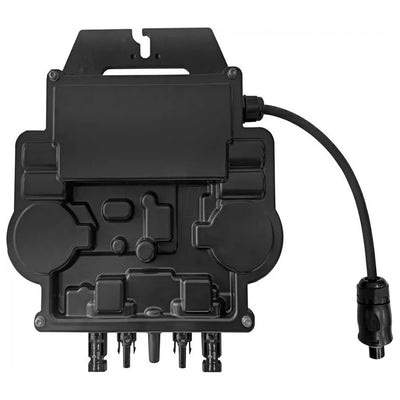
What is a Microinverter?
A microinverter is a small electronic device that attaches to a single solar panel and converts the direct current (DC) it produces into alternating current (AC) — the type of electricity used to power homes and businesses, and the form required to feed into the grid.
Traditional solar setups often rely on one central string inverter, which combines the DC output from many panels before converting it all at once. Microinverters take a different approach: each panel gets its own inverter, so conversion happens locally, right where the power is generated.
This panel-by-panel setup has a few practical benefits. If one panel is shaded, dirty, or underperforming, it won't drag down the output of the others, since each one operates independently. It also makes it possible to monitor the performance of individual panels rather than just the system as a whole, which makes spotting faults or inefficiencies much easier. And because conversion happens at the panel itself, microinverter systems are well suited to safety features like rapid shutdown, which de-energises rooftop wiring quickly in an emergency.
Microinverters are commonly used in residential solar installations, particularly where roofs have multiple orientations, partial shading, or a mix of panel types and ages — situations where a single central inverter would struggle to get the best out of every panel.